

Alsace in the Glow of Christmas
From Strasbourg to the villages of the Alsatian plains and the Wine Route, embark on an enchanting journey through the region's Christmas markets.
Imagine a river winding like a festive garland beneath the fir-covered slopes of the Vosges Mountains. Picture villages along its banks, their half-timbered houses sparkling like Christmas decorations. This is what Alsace, one of France's most beautiful regions, looks like at Christmas.
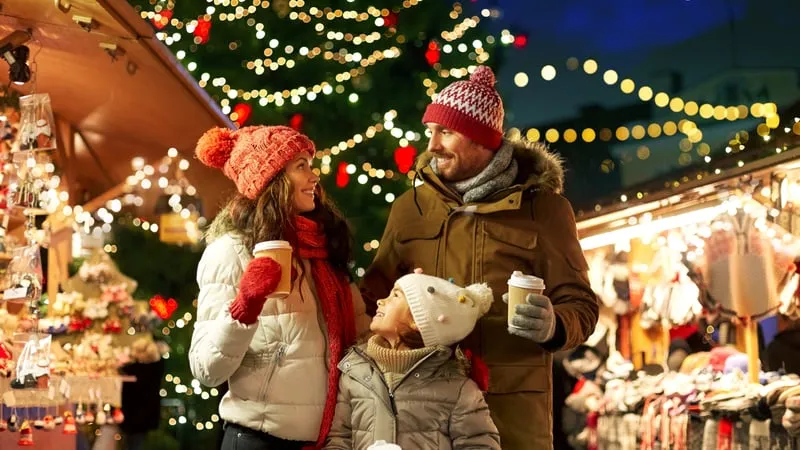
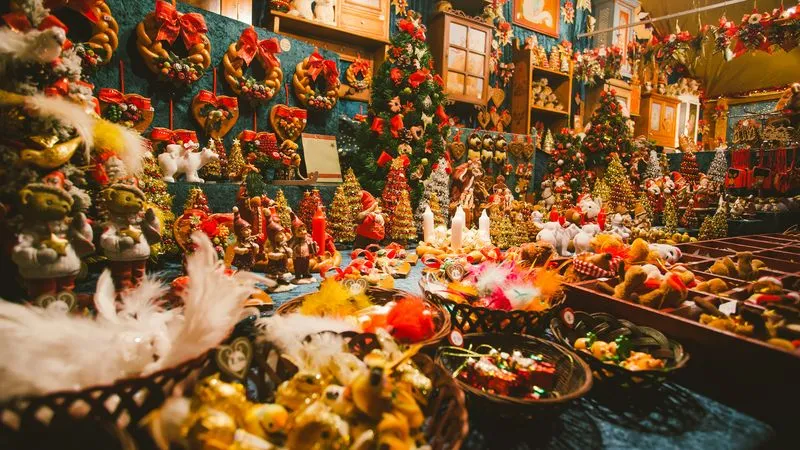
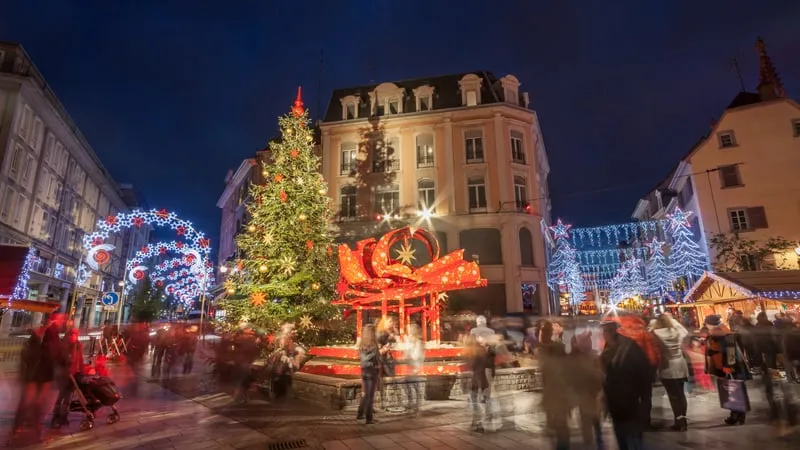
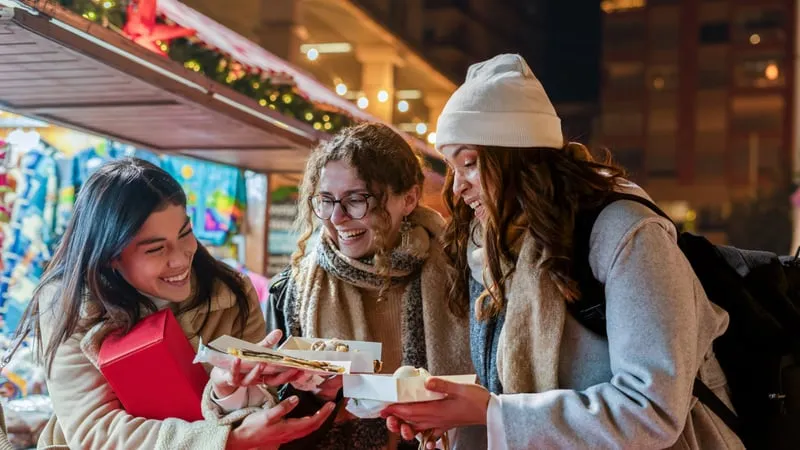
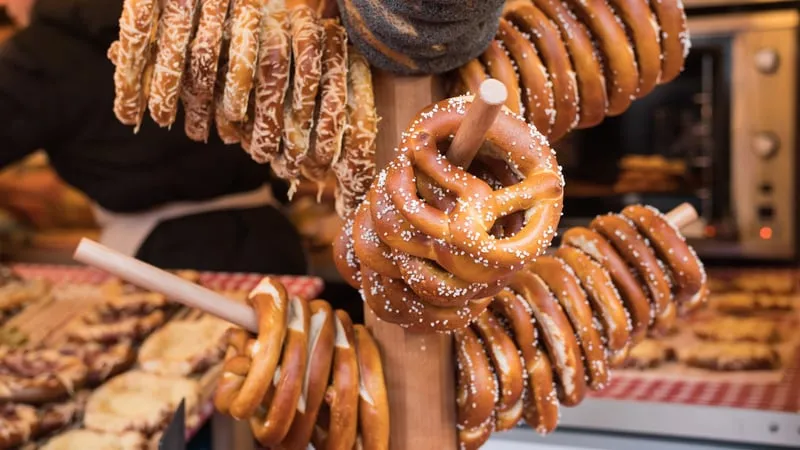
Pretzels, traditional crafts, tartes flambées, mulled wine, local beers… Beneath the warm glow of wooden chalets, Christmas markets bring the region to life. There are nearly a hundred of them, some lasting just a few days, others stretching over several weeks. Each showcases the richness and warmth of Alsace's unique cultural identity.
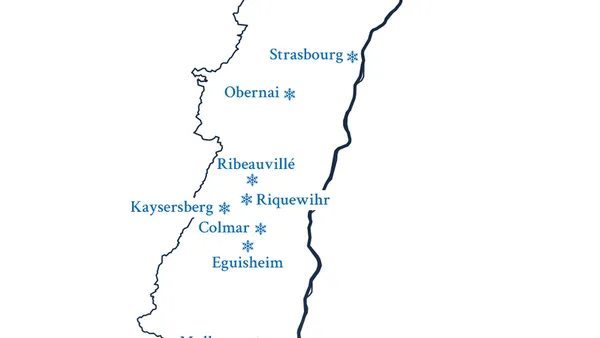
Summer remains the peak tourist season. Yet between Advent and the end-of-year festivities, in little more than a month, the region records over five million overnight stays. Visitor numbers in the major cities soar: more than three million in Strasbourg, over 1.5 million in Colmar and nearly one million in Mulhouse. Kaysersberg, Riquewihr, Ribeauvillé, Eguisheim, Obernai, Sélestat, Haguenau… Smaller towns and villages are no exception.
Here, visitors don't simply come to experience a Christmas market: they embark on an entire Christmas market tour. All you need to do is follow the Rhine, the river that separates Alsace from Germany, where the Christmas market tradition originated.
So why not set off along the "Christmas Market Route", travelling from village to village in the magical, welcoming atmosphere of the festive season?


Strasbourg, the Capital of Christmas
Granted, Santa lives in Lapland. But since 1992, Strasbourg has officially claimed the title of Capital of Christmas. And with good reason.
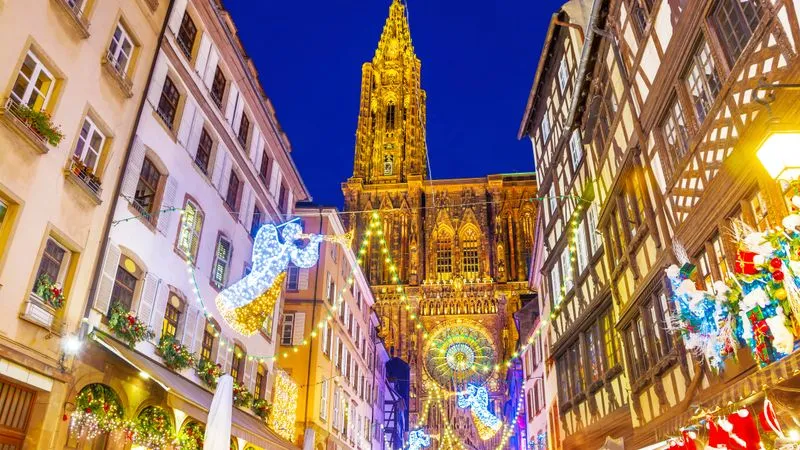
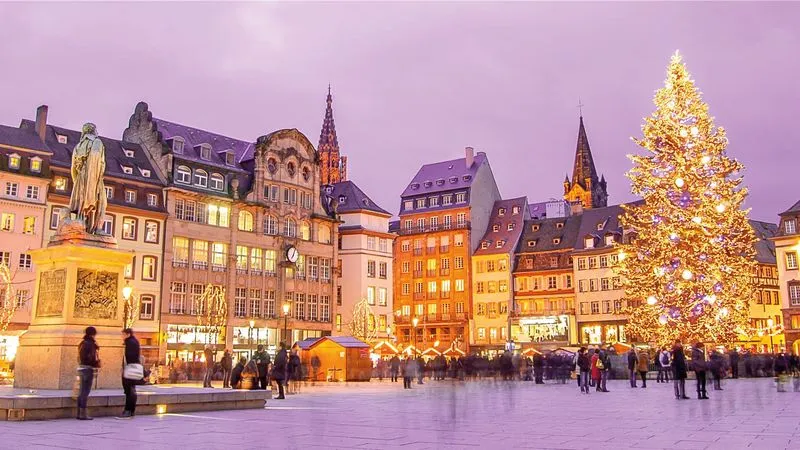
With around 300 chalets spread across the city, its magnificent Christmas tree, concerts and enchanting illuminations, particularly in the Carré d'Or district, the most European of Alsatian cities has transformed its Christmas market into a spectacular city-wide celebration. It has become an integral part of Strasbourg's identity, inspiring countless other destinations.
Strasbourg also boasts one of Europe's oldest Christmas markets and the oldest in France. Its origins date back to the 16th century. In 1570, in a city that had embraced the Protestant Reformation, the Christkindelsmärik (Market of the Christ Child) was established to replace the Saint Nicholas market and its associated gift-giving tradition, considered too closely linked to the veneration of saints.
Today, the magnificent Gothic cathedral, with its distinctive single spire, watches over the festivities.
Opening dates: 27 November to 24 December 2026.
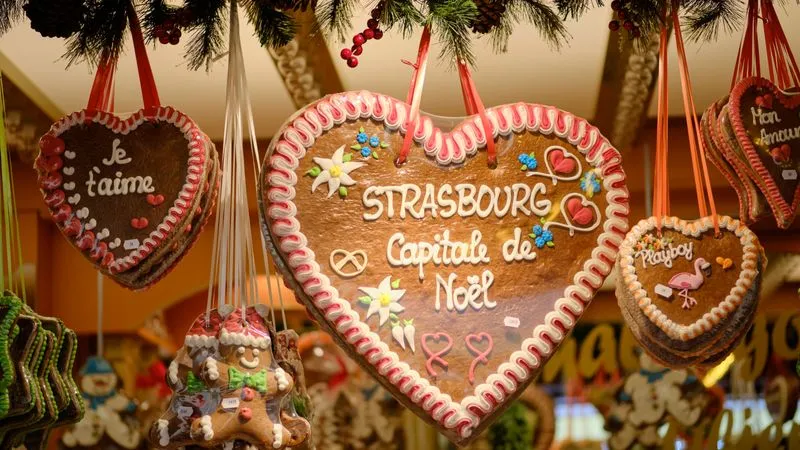
Obernai: A Christmas for Food Lovers
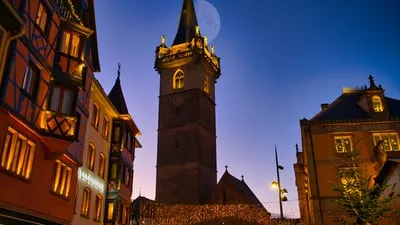

Like many Alsatian towns, Obernai is well worth a visit in its own right. But food lovers will tell you that its Christmas market is about much more than admiring the local architecture. Visitors come to discover beautifully handcrafted gifts to place beneath the tree and, above all, to indulge in regional specialities.
Around fifty chalets spread across five squares offer an abundance of festive treats: foie gras, cured meats, jams, bredele (traditional Alsatian Christmas biscuits), gingerbread, Alsatian wines and Christmas beer. Not to be missed is the famous local white mulled wine, served from the winegrowers' cauldron.
By celebrating the pleasures of the table, Obernai embraces its distinctive art de vivre. This town in the Bas-Rhin department is home to France's largest brewery, Kronenbourg, as well as Stoeffler, a renowned producer of Alsatian specialities. In short, there's plenty to sink your teeth into!
Opening dates: 27 November to 31 December 2026. Closed on 25 December.
New for 2026: A spectacular video mapping show entitled "Les fenêtres de l’Avent" (Advent Windows) will illuminate the façade of the Town Hall every evening from 1 to 24 December, with two projections each evening.
Ribeauvillé: Back to the Age of Troubadours
How could it be otherwise? Just a few kilometres from Riquewihr and Kaysersberg, Ribeauvillé proudly celebrates its own distinctive identity.
This medieval town in the Haut-Rhin has flourished for centuries beneath the protection of three fortified castles: Saint-Ulrich, Girsberg and Haut-Ribeaupierre. Once the capital of the Ribeaupierre lordship, the town has naturally chosen to celebrate the festive season in a style that reflects its medieval heritage.
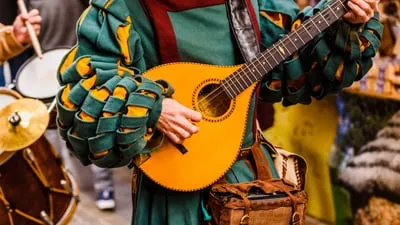
As elsewhere, wooden chalets line the streets. But what makes Ribeauvillé truly special is the colourful cast of characters who appear to have stepped straight out of the Middle Ages. Troubadours, jugglers, musicians, street performers and fire-eaters mingle with the crowds, while artisans revive the traditional crafts of blacksmithing, glassblowing, weaving and barrel-making.
Spit-roasted wild boar, cervoise (a traditional ale) and gingerbread feature on the menu. Just as in the fairs of centuries past, the historic centre becomes an open-air stage, filled with the lively atmosphere of a traditional folk festival.
Opening dates: Two weekends, 5 and 6 December, and 12 and 13 December 2026.

Riquewihr: A Jewel of the Alsace Wine Route

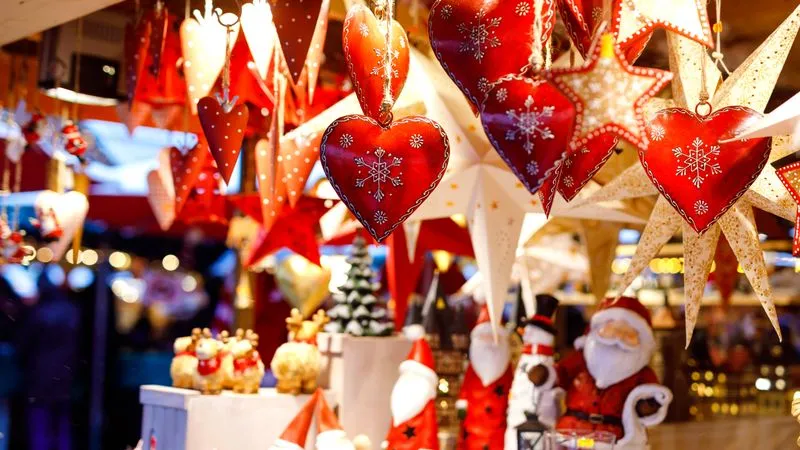
Just a short distance from Ribeauvillé and Kaysersberg, and also situated along the Alsace Wine Route, the medieval hillside village of Riquewihr has succumbed to the magic of Christmas.
The more adventurous can easily visit all three markets in a single day. Here, wandering through the streets is as much about discovering the village's remarkable architectural heritage as it is about browsing the Christmas stalls. Don't forget to look up!
In this wine-growing village, the spirit of Advent reigns supreme. Near the Dolder, a 25-metre-high medieval gateway tower, the famous and spectacular "Féerie de Noël" shop offers everything you could possibly need to decorate your Christmas tree all year round, delighting children and grown-ups alike.
The Christmas market itself has a distinctive layout. Rather than being confined to a single large square, its chalets are spread along the esplanade beside the ramparts and across the various squares of the historic centre. Rue du Général-de-Gaulle, the main street leading towards the upper part of the village, is an essential part of any visit.
Opening dates: 27 November to 20 December 2026.
Medieval Kaysersberg, nestled among the vineyards
Set in the Weiss Valley, at the foot of the Vosges Mountains and surrounded by vine-covered hillsides, Kaysersberg enjoys a truly regal setting. Its vineyards include the prestigious Schlossberg, particularly renowned for its Riesling.
Kaysersberg, whose name literally means "the Emperor's Mountain", invites visitors to explore its picturesque streets beneath the medieval castle. It is easy to see why it was voted France's Favourite Village in 2017.
As night falls, Kaysersberg and its Christmas markets light up, while the comforting scents of cinnamon and mulled wine drift through the narrow streets.
There is something for everyone here. Those looking for gifts and souvenirs should head to the artisan market in the Cour de l'Arsenal and behind Sainte-Croix Church, while food lovers can explore the farmers' market on Place de la Mairie.
Opening dates: The markets are open on Fridays, Saturdays and Sundays during the four weekends of Advent: 27–29 November, 4–6 December, 11–13 December and 18–20 December 2026.
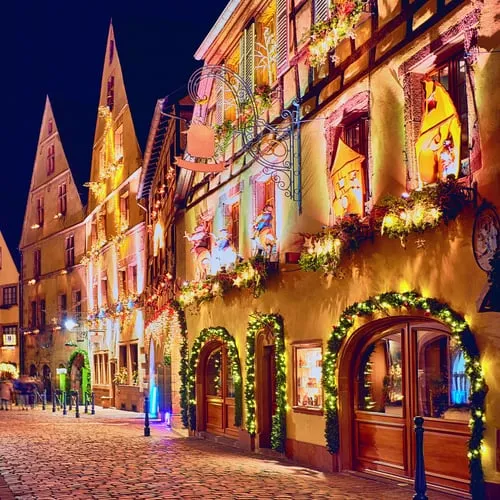
Colmar: Alsace at its finest

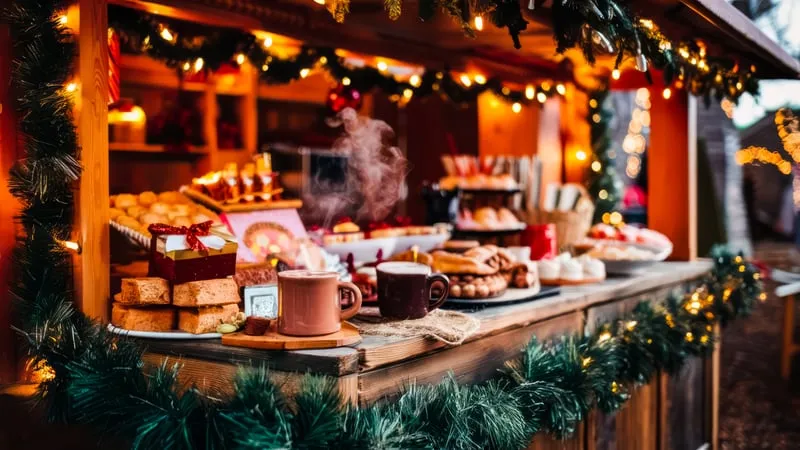
Look no further. If ever there was a perfect setting for a Christmas market, it is Colmar.
Along the banks of the River Lauch, Alsace's "Little Venice" boasts an exceptional architectural heritage. This picture-postcard setting brings together all the hallmarks of Alsatian charm: colourful half-timbered houses, cobbled streets, ornate shop signs and picturesque canals. Add a sprinkling of Christmas lights, and the scene becomes truly magical.
Six Christmas markets take pride of place in some of the most iconic locations of this charming town of just 70,000 inhabitants: Place des Dominicains, Place de l'Ancienne Douane, Place Jeanne-d'Arc, Place des Six-Montagnes-Noires, the artisans' market at the Koïfhus and the gourmet market.
Each has its own distinctive character, offering everything from traditional crafts and Christmas decorations to regional specialities, Alsatian delicacies, original creations and activities for children.
While all six share the same enchanting atmosphere, each offers something different to discover.
Opening dates: 23 November to 29 December 2026. The gourmet market and Ferris wheel will remain open until 3 January 2027.
Eguisheim: the art of wandering
Around thirty craftspeople and designers welcome visitors into charming, beautifully illuminated wooden chalets.
The Christmas market in Eguisheim, a small village of 1,700 inhabitants just five kilometres from Colmar, may not rival those of its neighbours in size. Nor does it try to. And yet, it is an absolute must-see.
First, for the quality of its products and the warmth of its welcome, which earned it the "Villes et Villages de Noël" (Christmas Towns and Villages) label in 2009.
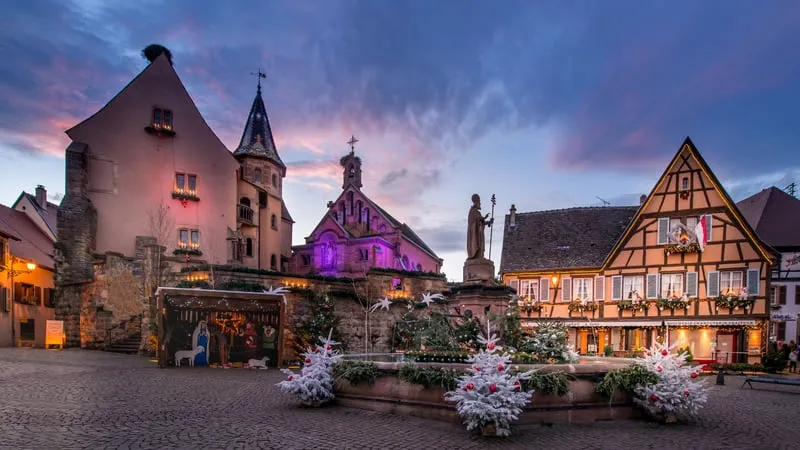
Second, for the extraordinary beauty of this wine-growing village, unlike any other. In 2003, Eguisheim joined the ranks of the "Most Beautiful Villages of France", before being voted France's Favourite Village in 2013.
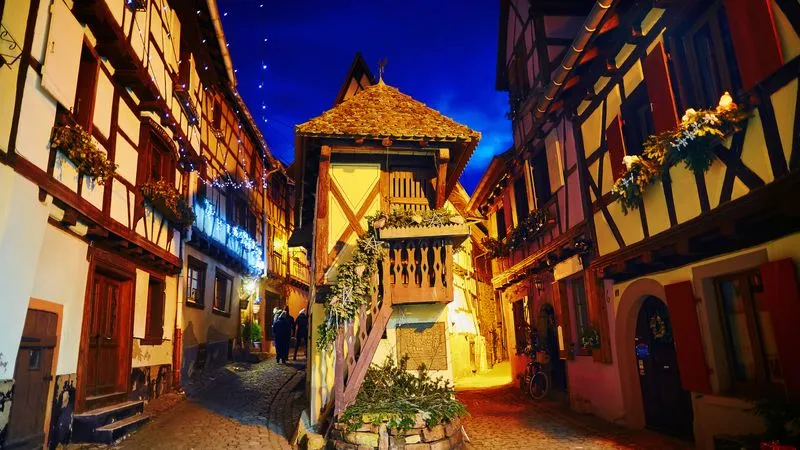
Its appeal goes far beyond its half-timbered houses, colourful façades, inner courtyards and traditional shop signs. This remarkably well-preserved village owes its distinctive character to its ancient medieval fortifications. Its cobbled streets wind in concentric circles around Saint-Léon Castle and the central square. The result is simply breathtaking.
And don't worry: even if you find yourself going round in circles, you'll never tire of the scenery!
Opening dates: 27 November to 23 December and 27 to 30 December 2026.
Mulhouse: A Christmas Market that makes an impression
In a region steeped in history, Mulhouse stands out for its distinctive industrial heritage. Once nicknamed the "French Manchester", the city proudly celebrates its past through four major museums: the National Automobile Museum, the Cité du Train railway museum, the Electropolis Museum and the Museum of Printed Textiles.
Together, these remarkable institutions make Mulhouse one of Europe's leading centres for technical and industrial museums.
For its Christmas market, the city pays tribute to this heritage by creating a unique "Christmas Fabric" each year. This specially designed textile adorns façades, chalets, pedestrian streets and festive decorations. It is quite literally everywhere.
The 2026 design, entitled "Winter Garden" and created by Manon During and Julie Fouilland, combines traditional Christmas colours (red, white and green) with shades of orange and champagne. Visitors can purchase the fabric by the metre or choose from a selection of tablecloths, napkins and decorative items, perfect for making a lasting impression at the Christmas table.
For a more traditional Christmas market experience, around 90 chalets celebrate the spirit of the festive season. Food lovers should also take the opportunity to sample fried carp, an iconic speciality of the neighbouring Sundgau region.
Opening dates: 20 November to 27 December 2026. Closed on 25 December.
Discover our Christmas Market tours and cruises
About the Author

Journalist Philippe Marcacci knows CroisiEurope’s ships and destinations particularly well, having travelled on numerous cruises.
He is also one of the two authors of La passion des croisières (A Passion for Cruises), the commemorative book celebrating CroisiEurope’s 50th anniversary.