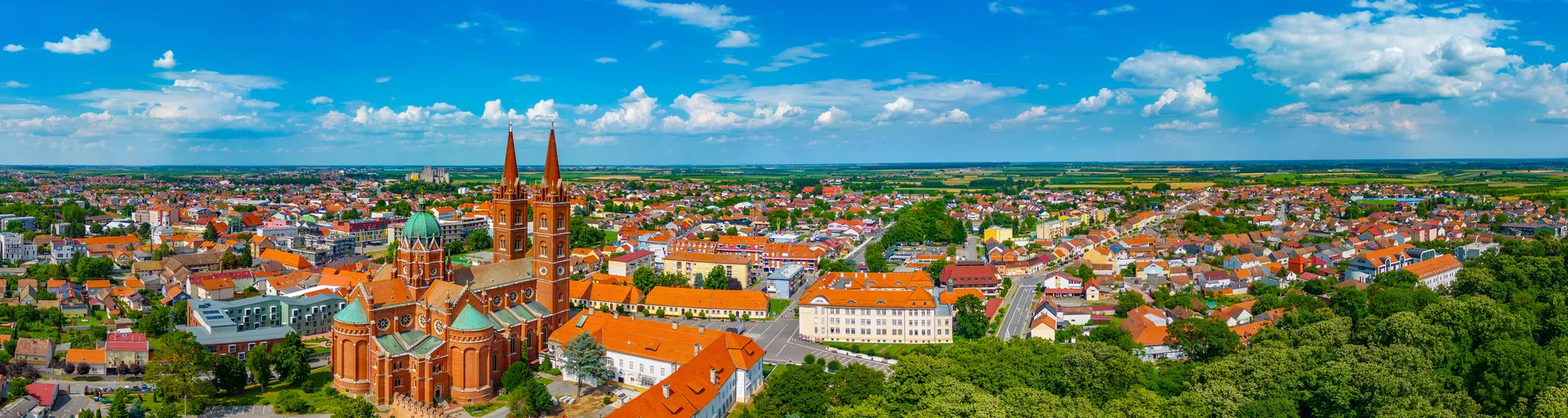
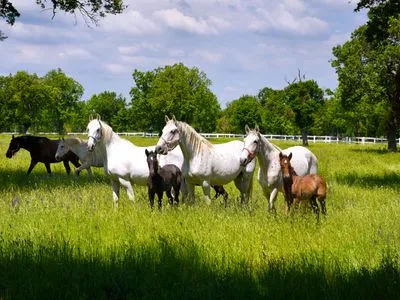
This iconic town of Slavonia is renowned for its rich religious and cultural heritage. The visit begins with the Cathedral of St. Peter and St. Paul, a 19th-century neo-Romanesque masterpiece and a symbol of the city. This red-brick cathedral dominates the town center with its two 84-meter-high towers. The three-nave neo-Romanesque structure, adorned with colorful biblical scenes, was commissioned in 1862 by Bishop Strossmayer. It took four years to build the cathedral, but no less than twelve years to complete its decoration. On Strossmayer Square, the heart of local life, you will discover a harmonious and lively architectural ensemble.Next, you will head to the Đakovo stud farm, famous for breeding Lipizzaner horses, a symbol of Slavonian tradition and expertise with these noble animals. Their breeding was introduced in 1580 by Austrian Archduke Charles II for the needs of the Vienna court. This tradition, recognized by UNESCO on the Representative List of the Intangible Cultural Heritage of Humanity, remains a source of regional pride.Return to the ship.
PLEASE NOTE
This iconic town of Slavonia is renowned for its rich religious and cultural heritage. The visit begins with the Cathedral of St. Peter and St. Paul, a 19th-century neo-Romanesque masterpiece and a symbol of the city. This red-brick cathedral dominates the town center with its two 84-meter-high towers. The three-nave neo-Romanesque structure, adorned with colorful biblical scenes, was commissioned in 1862 by Bishop Strossmayer. It took four years to build the cathedral, but no less than twelve years to complete its decoration. On Strossmayer Square, the heart of local life, you will discover a harmonious and lively architectural ensemble.Next, you will head to the Đakovo stud farm, famous for breeding Lipizzaner horses, a symbol of Slavonian tradition and expertise with these noble animals. Their breeding was introduced in 1580 by Austrian Archduke Charles II for the needs of the Vienna court. This tradition, recognized by UNESCO on the Representative List of the Intangible Cultural Heritage of Humanity, remains a source of regional pride.Return to the ship.
PLEASE NOTE